
Medically reviewed by the HealthClino Medical Review Team. Last updated: July 31, 2026. This article is for general information only and does not replace personalized medical advice — see the disclaimer at the end.
A decade ago, "seeing a doctor" meant one thing: sitting in a waiting room, watching the clock, hoping your name got called before your lunch break ended. That's no longer the only option — and for millions of people across Europe, it isn't even the default anymore.
Telemedicine services let you consult a licensed doctor from your phone, laptop, or tablet, at a time that actually fits your day. No commute, no waiting room, no taking half a day off work for a ten-minute conversation.
But "telemedicine" gets used loosely — sometimes interchangeably with telehealth, virtual healthcare, or telemedicine services companies that all promise more or less the same thing. If you're trying to figure out what you're actually paying for, when it makes sense, and when it doesn't, this guide walks through it properly.
Why trust this guide: This article was medically reviewed by the HealthClino Medical Review Team and draws on World Health Organization survey data and the EU's official regulatory definition of telemedicine, alongside HealthClino's own experience running scheduled online consultations for patients across Europe. It's written to inform your decision, not to replace a consultation with your doctor.
What Are Telemedicine Services, Exactly?
Telemedicine is the delivery of clinical care — diagnosis, treatment, follow-up — by a licensed health professional, over a distance, using video, audio, or secure messaging instead of an in-person visit.
The EU's own working definition frames it as healthcare delivered through information and communication technology, in situations where the health professional and the patient aren't in the same location, covering everything from a video consultation to the electronic transmission of a prescription. That's a useful distinction from the broader term "telehealth," which also covers things like remote monitoring devices and health information portals that don't necessarily involve a doctor at all.
In practice, for most people searching for telemedicine services, what you actually want is simple: a real conversation with a real doctor, without the logistics of an in-person appointment getting in the way.
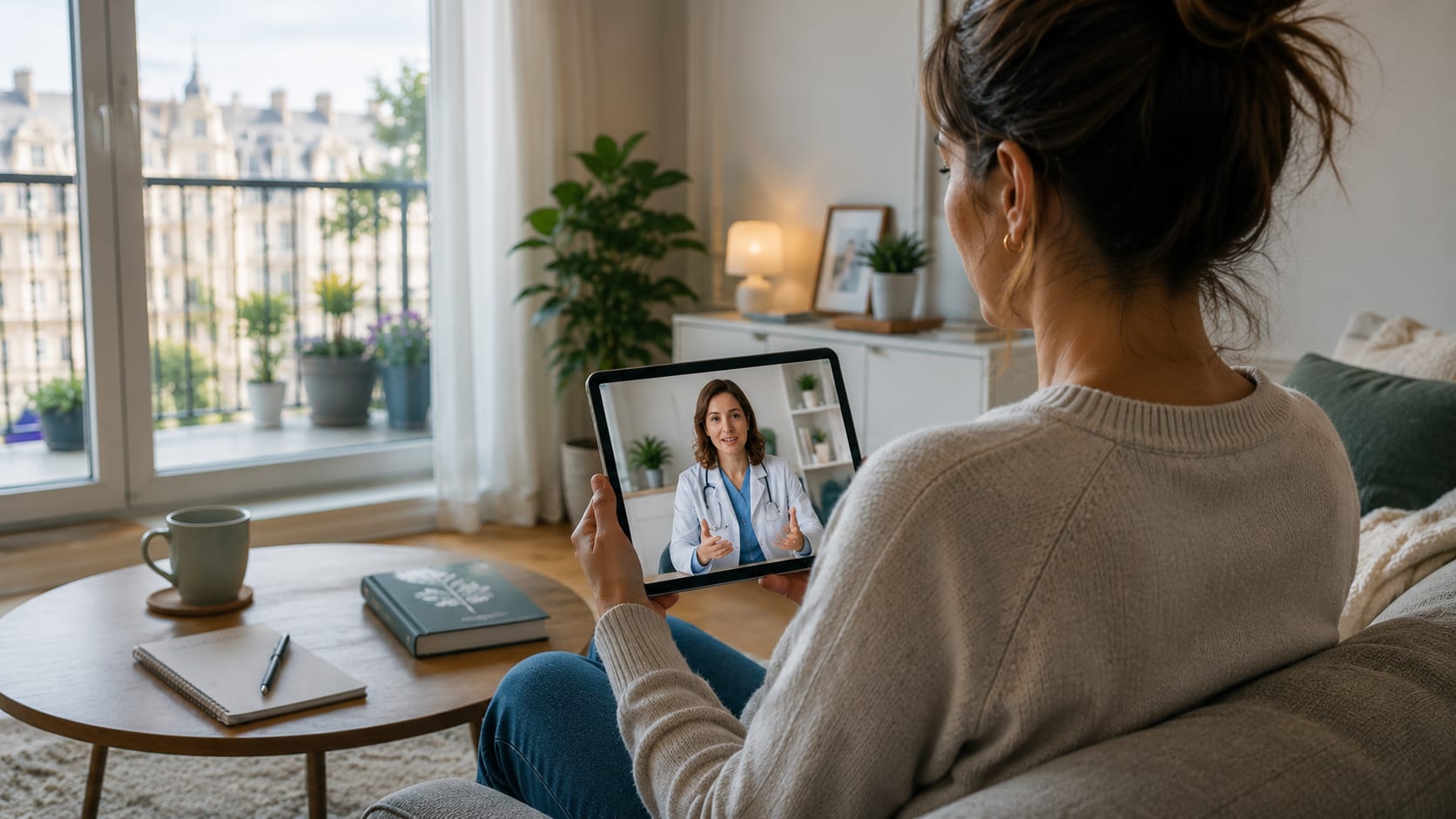
Why Telemedicine Adoption Is Accelerating Across Europe
A World Health Organization study tracked the progress and challenges of developing telecare across the 53 countries in the European region since the pandemic, using Norway's experience as a case study. Forty of those countries now have a national telehealth strategy in place, either standalone or folded into a broader digital care plan.
The categories seeing the fastest adoption aren't random. The research found teleradiology, telepsychiatry, and telemedicine to be the most commonly used telehealth services across the region, with remote consultations and monitoring becoming a normal part of how care gets delivered rather than a pandemic-era workaround.
A few forces are driving this beyond COVID's initial push:
- Aging populations across much of Europe mean more people managing chronic conditions who benefit from regular, low-friction check-ins rather than repeated trips to a clinic.
- Rural and underserved areas often have long waits for in-person GP access — telemedicine removes the distance problem entirely.
- Time-poor working adults increasingly expect the same convenience from healthcare that they get from everything else they book online.
That said, the same research is honest about the limits: adoption on its own isn't enough. Funding, infrastructure, and clear national policy all shape whether telemedicine works well in practice — which is exactly why choosing a properly licensed, well-run provider matters more than picking whichever app shows up first in a search.
What Telemedicine Services Actually Cover
"Telemedicine" isn't one product — it's a set of services, and knowing which one you need saves time.
24/7 Online Doctor Consultation
This is the core service: a video, audio, or chat consultation with a licensed doctor, available around the clock rather than during standard clinical hours. Useful for anything from a persistent cough to questions about a new symptom that's bothering you at 11pm.
Sick Certificates and Medical Certificates
Need documentation for your employer or school without dragging yourself to a clinic while unwell? A telemedicine consultation can result in a sick certificate or medical certificate issued by the consulting doctor, based on the same clinical judgment they'd apply in person.
Medication Orders
For conditions that don't require a new diagnosis — a repeat prescription, a medication review — a telemedicine consultation can result in a medication order, saving a trip that would otherwise just be a formality.
Travel Health Consultations
Planning a trip and need vaccination advice, altitude sickness guidance, or a check before flying with a pre-existing condition? A travel health consultation lets you get this sorted from home instead of squeezing in a travel clinic visit.
Follow-Up Consultations
Already been diagnosed with something and just need a check-in on how treatment is going? A follow-up consultation is often faster and just as effective online, especially when no physical exam is required.
Second Medical Opinions
Facing a significant diagnosis or treatment recommendation and want another qualified doctor to weigh in before deciding? A second medical opinion consultation gives you that without the delay of arranging another in-person referral.
Providers like HealthClino structure their offering exactly along these lines, with pricing running from €29 to €45 depending on which of these services you book — worth checking their offers and packages page for current pricing on each.
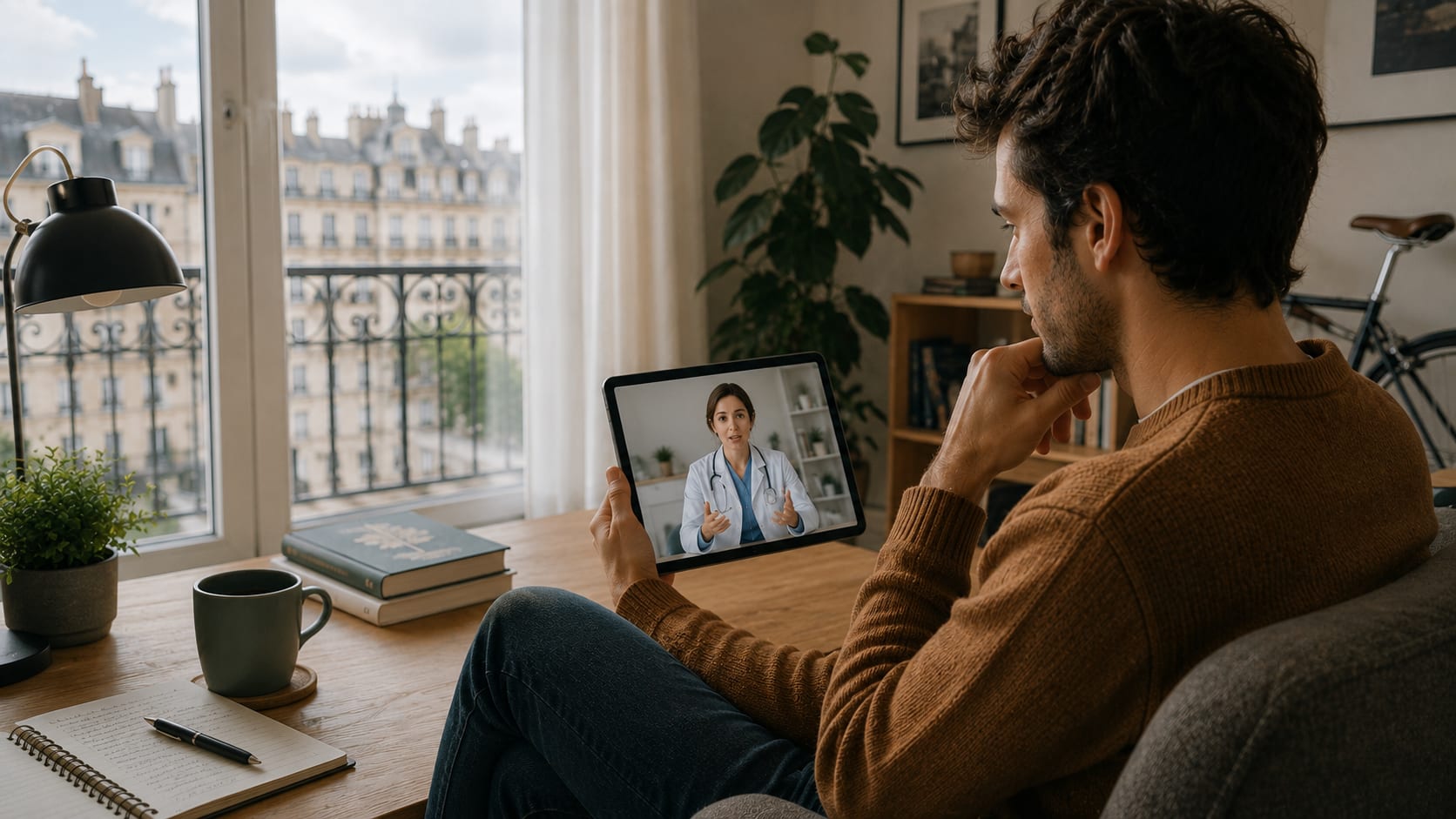
How an Online Doctor Consultation Actually Works
The mechanics are simpler than most people expect:
- Choose the service you need — a general consultation, a sick certificate, a follow-up, and so on.
- Book a slot that works for your schedule, rather than taking whatever time a clinic has free.
- The doctor joins at your scheduled appointment time — you're not sitting in a virtual waiting room hoping to get squeezed in.
- Talk through your symptoms or concern , just as you would face-to-face.
- Receive next steps — that might be advice, a certificate, a prescription, or a referral for in-person care if the doctor decides that's necessary.
Before your appointment, it helps to have your ID, a list of any current medications, and a quick note of your symptoms or the reason for the consultation. It makes the call more efficient and means the doctor spends the time on your current concern.
If you're booking for the first time, HealthClino's book appointment page walks through slot selection directly, and the doctors page lists the licensed professionals available.
If you need medical advice for a non-emergency concern, an online doctor consultation can provide convenient access to a qualified healthcare professional.
When Telemedicine Is the Right Choice — and When It Isn't
Telemedicine is genuinely well-suited to a lot of situations:
- Minor illnesses — colds, minor infections, digestive upset
- Prescription renewals for ongoing conditions
- Sick certificates and medical certificates
- Travel health prep before a trip
- Follow-up consultations after a diagnosis
- Second opinions on a treatment plan
It is not a substitute for emergency care. Chest pain, severe difficulty breathing, major trauma, signs of stroke, or anything that feels like a genuine emergency needs immediate in-person or emergency services — not a video call. A responsible telemedicine consultation will always redirect you to appropriate emergency or in-person care when that's what the situation calls for, rather than trying to manage something remotely that shouldn't be.
Telemedicine for Different Life Stages
Pediatric Telemedicine
Parents increasingly use telemedicine for simple pediatric concerns — a persistent cold, a minor rash, questions about dosing for a common medication. It's often faster than arranging a same-day pediatric appointment, though any concern involving a very young infant, high fever, or anything the parent is genuinely worried about still warrants in-person pediatric care. Telemedicine works best here as a fast first step, not a replacement for a pediatrician relationship.
Telemedicine for Frequent Travelers and Remote Workers
If you split time between countries or work remotely while traveling, telemedicine solves a real problem: continuity of care when you don't have a local GP wherever you happen to be. A travel health consultation before departure and a follow-up consultation mid-trip if something comes up can cover most of what you'd otherwise lose by being away from your usual doctor.
What to Look for in a Telemedicine Provider
Not every "telemedicine company" is built the same way. Before booking, it's worth checking:
- Are the doctors actually licensed in the relevant jurisdiction, and is that easy to verify?
- Is pricing transparent before you book, or hidden until checkout?
- Do you get a real appointment slot , or are you just waiting in a queue whenever a doctor becomes free?
- Is data handled securely and compliantly — this matters more with medical information than almost any other category of personal data.
- Does the provider cover the breadth of services you might need — certificates, prescriptions, travel health, second opinions — or just basic consultations?
HealthClino's model — licensed doctors, a defined appointment slot the doctor joins at the scheduled time, and clear pricing from €29 to €45 across services — is built around exactly these questions. You can review doctor credentials and service scope on the general practitioner online and about us pages.
How Much Do Telemedicine Services Cost in Europe?
Pricing varies by provider and service, but a useful benchmark is the €29–€45 range that covers most individual consultation types — sick certificates and quick consultations at the lower end, more involved services like second opinions or specialist follow-ups toward the higher end.
Compared to an urgent-care visit or a private in-person GP appointment in most European countries, that's a significantly lower cost for a large share of the situations telemedicine actually handles well — and without the time cost of travel and waiting.
Finding "Telehealth Near Me" — Does Location Even Matter Anymore?
It's a common search, but the honest answer is: for telemedicine specifically, location matters far less than it used to. The entire value of the service is that the doctor doesn't need to be near you — what actually matters is whether the provider is licensed to operate in your country and whether their doctors can practice there. Instead of searching for something "near me," the most useful question is which provider serves your country and offers the specific service you need, at a time that works for your schedule.
Frequently Asked Questions
Is telemedicine as effective as an in-person doctor visit?
For a large share of common concerns — minor illness, prescription renewals, follow-ups, certificates — yes, it's comparable. For anything requiring a physical exam, imaging, or emergency care, a licensed doctor will tell you during the consultation that in-person care is the right next step.
Can I get a prescription through a telemedicine consultation?
Yes, when clinically appropriate — this is what a medication order consultation is for. The doctor makes that determination the same way they would in person.
Are online sick certificates legally valid in Europe?
Generally, yes, when issued by a licensed doctor through a properly regulated telemedicine service — but requirements can vary slightly by country and employer, so it's worth checking your specific situation if you're unsure.
How do I choose between different telemedicine companies?
Compare licensing transparency, pricing clarity, appointment scheduling (a real slot versus an open queue), and the breadth of services offered, rather than choosing based on whichever result appears first.
Is telemedicine covered by insurance in Europe?
Coverage varies significantly by country and insurer. Some providers work with insurance directly; others operate on transparent out-of-pocket pricing, which is worth confirming before booking.
What happens if the doctor decides I need to be seen in person?
A responsible telemedicine consultation includes a referral or clear guidance on next steps — the point isn't to keep everything remote at all costs, it's to get you to the right level of care.
The Bottom Line
Telemedicine services have moved from pandemic necessity to a genuinely useful, permanent part of how healthcare works across Europe. They're not a replacement for emergency care or every kind of medical need — but for the wide range of situations they do cover well, they save time, cost less, and put the appointment on your schedule instead of the clinic's.
If you're ready to try it, book an appointment with a licensed doctor at a time that works for you, or check the FAQs if you still have questions about how it works.
Medical disclaimer: This article is provided for general informational purposes only and is not a substitute for professional medical advice, diagnosis, or treatment. Telemedicine is appropriate for any individual case depends entirely on assessment by a qualified doctor, taking into account your specific symptoms, history, and, where needed, physical examination or in-person follow-up. Doctors providing consultations through this platform are licensed and regulated professionals who practice in accordance with the medical and prescribing regulations of their country of licensure, and may refer you to in-person or emergency care where that is clinically appropriate. If you think you may have a medical emergency, seek immediate in-person or emergency care rather than booking an online consultation. Never disregard professional medical advice or delay seeking it because of something you've read here.
This article was medically reviewed by the HealthClino Medical Review Team on July 31, 2026 for clinical accuracy. It is reviewed periodically and updated to reflect current medical guidance and regulatory changes. Referenced sources include World Health Organization (WHO) telehealth adoption survey data for the European region and the European Commission / EUR-Lex regulatory definition of telemedicine. Patient data shared during consultations is handled in accordance with GDPR and applicable national healthcare privacy regulations — for full details, see our privacy policy and terms and conditions .