
Last updated: 15 August 2026 | Medically reviewed by: the HealthClino Medical Team
A painful sore on the tongue naturally gets called a "cold sore" by most people, since that's the catch-all term for any mouth ulcer. But there's a genuine medical distinction worth knowing here: true cold sores — herpes labialis — almost always appear on the lips or the skin around the mouth, not on the tongue itself. A painful sore actually on the tongue is far more likely to be a canker sore, a completely different condition with a different cause. Getting this right matters, because the two need different care.
Why "cold sore on the tongue" is usually a mislabel
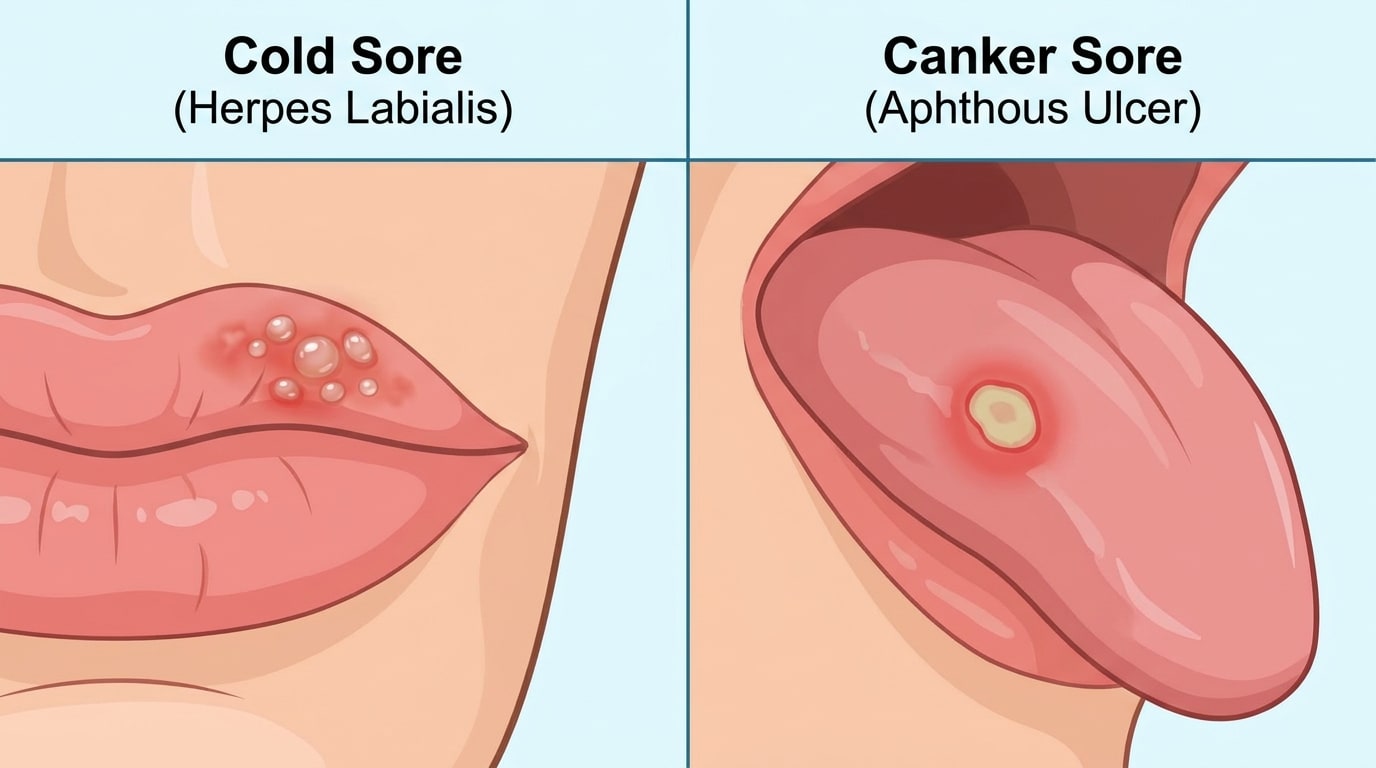
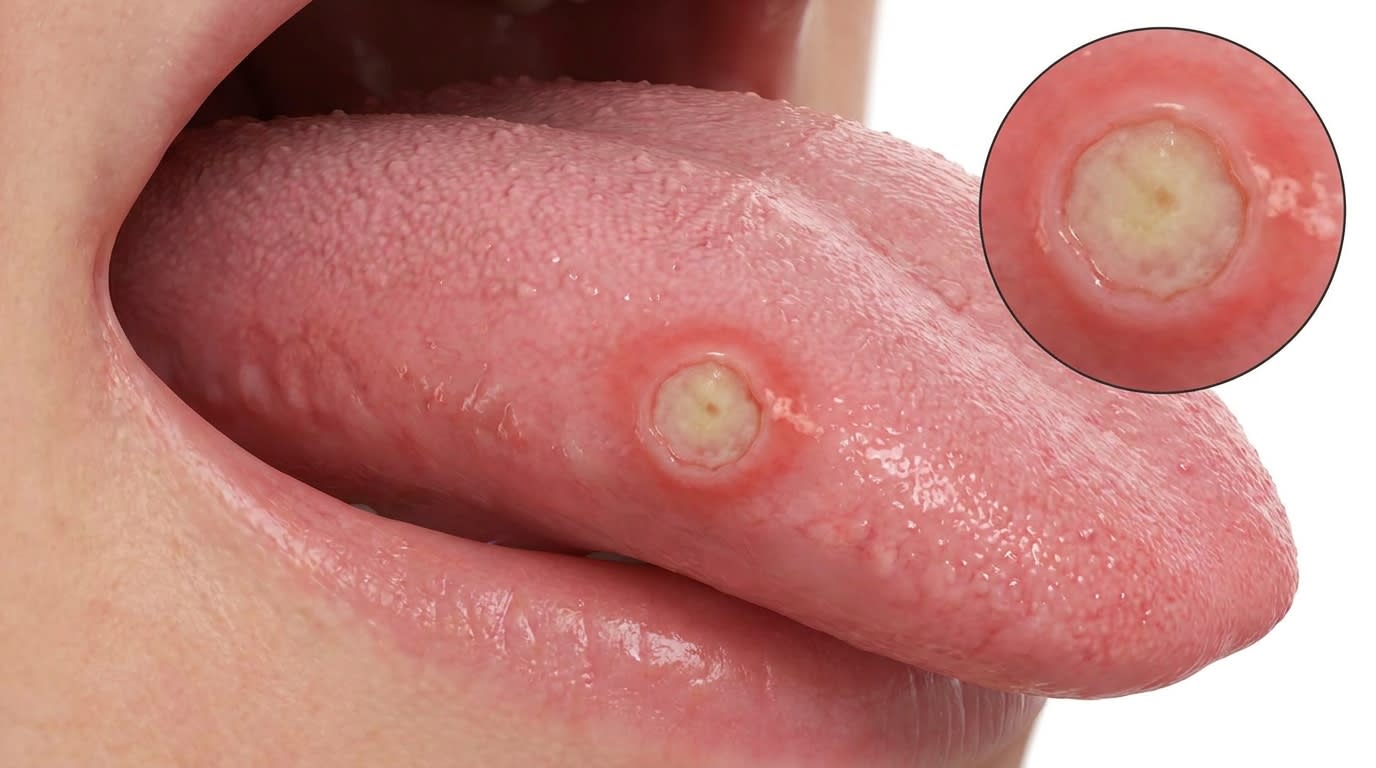
Recurrent cold sores are caused by the herpes simplex virus (HSV-1) reactivating in nerve tissue and travelling to the skin's surface — and that surface is almost always the outer lip or the skin immediately around it, sometimes extending to the chin or nose. Genuine recurrent HSV lesions inside the mouth, on non-keratinized tissue like the tongue, gums, or inner cheeks, are actually uncommon in otherwise healthy adults. What most people experience as a painful sore specifically on the tongue is a canker sore (aphthous ulcer) instead — a small, round, white-or-yellow ulcer with a red border that forms on soft oral tissue, caused by an immune response rather than a virus, and not contagious at all.
Cold Sore vs. Canker Sore: The Actual Differences
Cold Sore (Herpes Labialis) Canker Sore (Aphthous Ulcer) Typical location Lips, skin around the mouth Tongue, inner cheeks, inner lips, soft palate Cause Herpes simplex virus (HSV-1) Immune-related, not viral Contagious? Yes No Appearance Cluster of fluid-filled blisters that crust over Round or oval, white/yellow centre, red border Warning sign beforehand Tingling, itching, or burning before it appears Usually appears without warning Healing time 7–10 days 1–2 weeks
When it genuinely could be herpes on the tongue
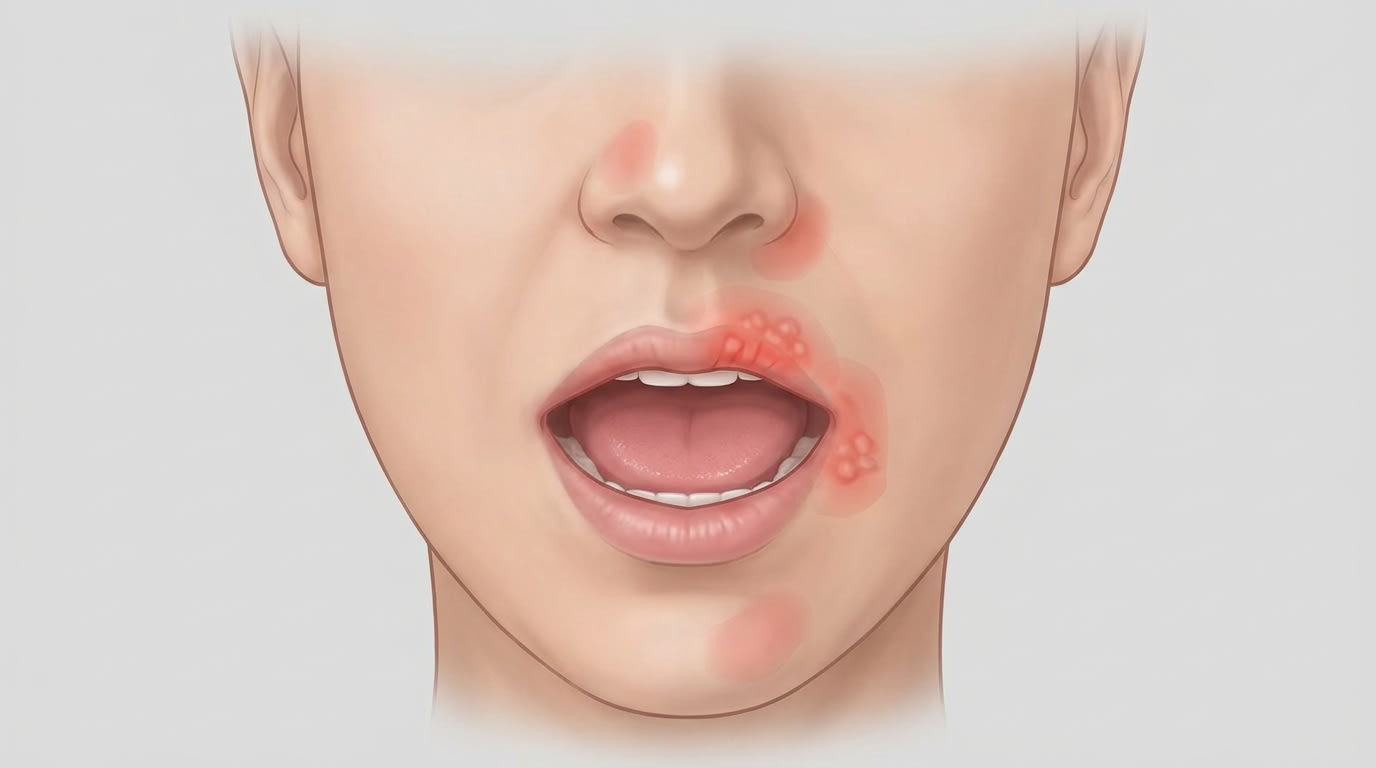
There are two real exceptions worth knowing. The first is a primary HSV infection — usually happening in childhood, the first time someone is exposed to the virus — which can cause a much more widespread condition called herpetic gingivostomatitis: multiple painful sores across the gums, tongue, and inside the mouth, often with fever and general illness, not just a single lesion. This is a different clinical picture entirely from an ordinary recurrent cold sore. The second exception is rare recurrent intraoral HSV, which can occasionally affect the gums, hard palate, or back of the tongue, particularly in people who are immunocompromised — uncommon, but real, and generally something a clinician should assess rather than self-diagnose.
What to actually look for
A few practical clues help sort out which one you're dealing with: location (lip versus tongue is the single biggest clue), whether it started with tingling beforehand (typical of cold sores, unusual for canker sores), and whether you feel generally unwell with fever (suggestive of a first-time HSV infection rather than an everyday canker sore). If a sore is unusually large, doesn't heal within two to three weeks, or keeps recurring in an atypical pattern, that's a reason to get it properly assessed rather than assuming either label.
Managing a canker sore
Most canker sores heal on their own within one to two weeks without treatment. In the meantime, protective gels that shield the ulcer from irritation, antiseptic mouthwashes containing chlorhexidine, and topical local anaesthetics can all reduce discomfort. Avoiding acidic or spicy foods while it heals helps too. Frequent canker sores — more than a few episodes a month, or ones accompanied by fever, joint pain, or rashes — are worth discussing with a doctor, since recurrent aphthous stomatitis can occasionally be linked to an underlying condition worth investigating.
Managing a genuine cold sore
If what you're actually dealing with is a lip-based cold sore rather than a tongue lesion, antiviral cream or tablets are most effective when started at the first tingling sign, and our deeper guide on whether cold sores are always herpes covers the full picture, including triggers and prevention.
Other things people commonly mix up in this category
Mouth and genital sores get confused with each other more than people expect — the same way BV and yeast infections are often mistaken for one another despite having different causes and treatments. In both cases, appearance alone isn't a reliable enough guide, and getting the actual diagnosis right changes what treatment will actually help.
Red flags that need medical attention
Most mouth sores are harmless and resolve on their own, but it's worth seeing a doctor if:
- A sore hasn't healed after two to three weeks
- Sores are unusually large or numerous
- You have a fever alongside multiple mouth sores
- Sores keep recurring frequently
- You have a weakened immune system and develop any new mouth sore
When to seek urgent care
Rarely, mouth sores can be part of something more serious. Seek prompt medical attention if you experience:
- Difficulty swallowing or breathing
- High fever with widespread mouth sores
- Signs of dehydration from being unable to eat or drink
- A sore that's spreading rapidly or looks unlike a typical ulcer
How an online consultation can help
A same-day video consultation is genuinely useful for exactly this kind of judgment call — a doctor can look at the location, appearance, and pattern of a mouth sore and tell you whether it fits a canker sore, a cold sore, or something that needs a closer in-person look. If antiviral treatment is appropriate for a genuine HSV outbreak, it can be prescribed the same day. What a video consultation can't do is examine deep inside the mouth the way a dentist or doctor can in person, so anything persistent, unusual, or accompanied by systemic symptoms like fever needs an in-person assessment.
Frequently asked questions
Can cold sores actually appear on the tongue? Rarely in adults — recurrent cold sores almost always affect the lips. A sore genuinely on the tongue is far more likely to be a canker sore, though first-time HSV infections in children can affect the whole mouth including the tongue.
How can I tell if my mouth sore is contagious? Cold sores (HSV) are contagious; canker sores are not, since they're an immune reaction rather than an infection. Location and whether you had tingling beforehand are the best clues before a proper diagnosis.
Do canker sores need antiviral medication? No — antivirals treat HSV, not canker sores, which don't respond to antiviral treatment since they aren't caused by a virus.
Why do I keep getting canker sores? Frequent recurrence can be linked to stress, minor mouth trauma, certain foods, or occasionally an underlying condition — if it's happening more than a few times a month, it's worth discussing with a doctor.
Is a sore with fever always a first-time herpes infection? Not necessarily, but widespread mouth sores with fever, especially in a child, are a classic pattern for primary HSV infection and worth having assessed.
Booking a consultation with HealthClino
If you're not sure whether your mouth sore is a cold sore, a canker sore, or something else, our doctors can assess it the same day — you can book your appointment now at https://www.healthclino.eu/book-appointment. Check the FAQs or the full range of services before booking.
What this doesn't replace
A video consultation is well suited to telling apart the everyday version of this question, but anything persistent, unusually severe, or accompanied by systemic symptoms needs an in-person exam by a doctor or dentist.
Sources
- Mayo Clinic — Cold sores: Symptoms and causes
- American Dental Association / Colgate Oral Health — Canker sore vs. cold sore guidance
- GoodRx Health — Canker Sores vs. Cold Sores clinical comparison
- Northwestern Medicine — Is It a Canker Sore or a Cold Sore?
This article is intended for general informational purposes and does not replace professional medical or dental advice. If a mouth sore persists, worsens, or is accompanied by fever or difficulty swallowing, seek medical attention.
Medically reviewed by the HealthClino Medical Team | Last updated: 15 August 2026